

Key Takeaways:
- Fatty liver disease is common, and in its earliest stage it’s often harmless and reversible.
- It becomes dangerous when it progresses to NASH (steatohepatitis), fibrosis, cirrhosis, liver failure, or liver cancer.
- Most people with fatty liver have no symptoms at first, which is why routine screening matters.
- Left untreated, advanced fatty liver disease can raise the risk of heart disease, diabetes, and liver failure.
The answer isn’t always straightforward. For many people, fatty liver disease remains mild and improves with healthy lifestyle changes. For others, it may gradually progress to liver inflammation, scarring, and more serious complications if left untreated.
Understanding where you are on that spectrum is the key to protecting your long-term liver health. This blog explains how dangerous fatty liver is, when you should be concerned, what symptoms to watch for, and what you can do to reduce your risk.
Quick Answer
Is fatty liver dangerous? Usually not in its early stages. Simple fatty liver often causes little or no liver damage and may improve with lifestyle changes. It can become serious when it progresses to MASH, fibrosis, cirrhosis, or liver cancer. Early detection and proper care can help prevent or slow liver damage.
What Is Fatty Liver Disease?
Fatty liver disease develops when excess fat builds side the liver. While some liver fat is normal. However, when fat accounts for more than about 5% to 10% of the liver’s weight, it is generally considered fatty liver disease.
There are two main types:
- Metabolic dysfunction-associated steatotic liver disease (MASLD): Previously called nonalcoholic fatty liver disease (NAFLD), this form is closely linked to obesity, insulin resistance, type 2 diabetes, high cholesterol, and metabolic syndrome.
- Alcohol-related fatty liver disease (ALD): Caused by long-term excessive alcohol consumption.
Both conditions may begin with simple fat accumulation but can progress to inflammation and scarring if the underlying cause isn’t managed.
Fatty liver disease is also common. The National Institute of Diabetes and Digestive and Kidney Diseases (NIDDK) estimates that about 24% of U.S. adults have NAFLD, the previous term for what is now commonly called MASLD.
Quick Fact
MASLD does not always progress to advanced liver disease. However, a more serious form called metabolic dysfunction-associated steatohepatitis (MASH), formerly known as NASH, can develop when excess liver fat is accompanied by inflammation and liver cell damage. NIDDK estimates that about 1.5% to 6.5% of U.S. adults have NASH.
What Are the Symptoms of Fatty Liver Disease?
One reason fatty liver disease often goes unnoticed is that most people have no symptoms during the early stages.
When symptoms do occur, they may include:
- Fatigue
- Mild discomfort in the upper-right abdomen
- Feeling generally unwell
As liver damage progresses, symptoms can become more serious and may include:
- Yellowing of the skin or eyes (jaundice)
- Swelling in the abdomen or legs
- Easy bruising
- Confusion or difficulty concentrating
- Unexplained weight loss
Because symptoms often appear late, routine health checks and liver screening are often the best ways to detect the disease early.
Is Fatty Liver Dangerous?
Yes, fatty liver is dangerous but not for everyone.
Many people ask, “Is fatty liver disease dangerous?” The answer depends largely on whether the disease progresses beyond simple fat accumulation.
Simple fatty liver usually causes little or no permanent liver damage. However, ongoing inflammation can gradually injure liver cells and lead to fibrosis (scar tissue). Over time, advanced fibrosis may develop into cirrhosis, permanently affecting liver function.
The encouraging news is that most people with early-stage fatty liver never develop severe liver disease, especially when risk factors such as obesity, diabetes, or high cholesterol are managed early.
How Dangerous Is Fatty Liver? Understanding the Stages
The best way to understand how dangerous fatty liver can be is to look at its different stages.
So, is fatty liver serious?
It can become serious when inflammation and scarring develop. However, many people remain in the early stages throughout their lives with appropriate lifestyle changes and medical care.
Who Is Most at Risk?
Certain health conditions increase both the likelihood of developing fatty liver disease and the chance that it will progress.
Your risk is higher if you have:
- Obesity or excess abdominal weight
- Type 2 diabetes or prediabetes
- Insulin resistance
- High cholesterol or triglycerides
- Metabolic syndrome
- High blood pressure
- Sleep apnea
- A family history of liver disease
- Regular alcohol consumption
Having one or more of these risk factors doesn’t mean you’ll develop advanced liver disease, but it does make regular monitoring more important.
Does Fatty Liver Get Worse Over Time?
It can, but progression is not inevitable. Some people remain in the early stage for years, while others develop inflammation and fear that gradually damage the liver.
The risk is higher when factors such as excess weight, insulin resistance, poorly controlled blood sugar, high cholesterol, or ongoing alcohol use are not addressed.
The progression generally follows this pattern:
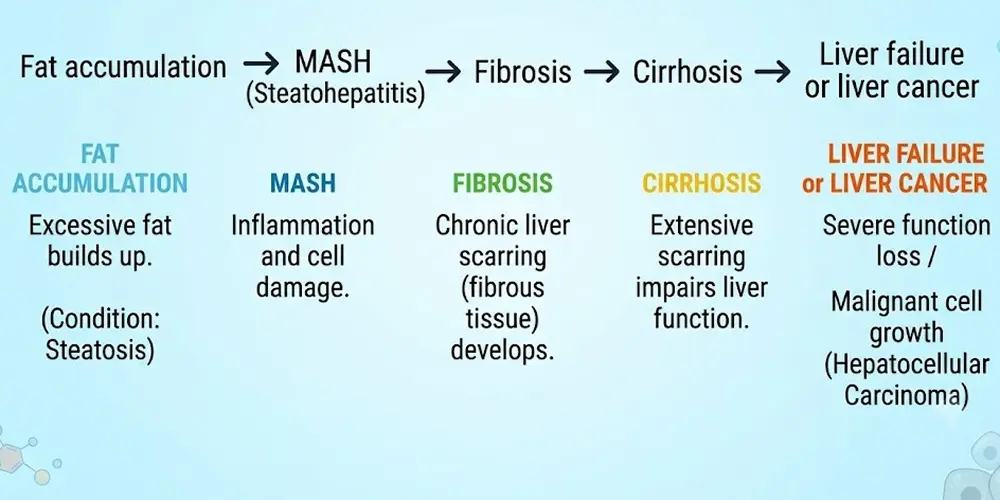
However, not everyone moves through every stage. Early diagnosis and management can help slow or prevent progression.
What Happens If Fatty Liver Is Left Untreated?
In some people, nothing serious may happen for years. In others, ongoing inflammation can cause progressive liver scarring and eventually lead to advanced liver disease.
Possible complications include:
- MASH, which causes ongoing liver inflammation
- Fibrosis, or progressive liver scarring
- Cirrhosis and permanent liver damage
- Liver failure in advanced cases
- Liver cancer
- Increased cardiovascular and metabolic health risks
This is why a fatty liver diagnosis shouldn’t be ignored, even when you feel completely well.
Can Fatty Liver Become Life-Threatening?
Yes, but this is generally associated with advanced disease rather than simple fatty liver.
As fibrosis progresses to cirrhosis, the liver can lose its ability to perform essential functions. Advanced cirrhosis may cause complications such as fluid buildup, internal bleeding, confusion, and liver failure. Liver cancer is another serious potential complication.
So, the simple answer to the question is, “Is fatty liver life-threatening?” is that early-stage disease usually is not, but advanced fatty liver disease can become life-threatening if it progresses to serious complications.
Fatty Liver Disease Clinical Trials
Take a Step Toward Better Liver Health
Your participation in a Fatty Liver Disease clinical trial could help lead to better treatments for many.
When Is Fatty Liver Dangerous?
Fatty liver becomes more dangerous when there is evidence of significant inflammation, fibrosis, or cirrhosis.
You should discuss your liver health with a healthcare provider if you have fatty liver along with:
- Type 2 diabetes or prediabetes
- Obesity or significant abdominal weight
- Persistently elevated liver enzymes
- High cholesterol or triglycerides
- Regular alcohol consumption
- Imaging that suggests liver scarring
- A family history of liver disease
You may also wonder, “Should I worry about fatty liver?” Rather than panic, focus on finding out what stage you’re in. A simple diagnosis of fatty liver does not tell you how scarring, if any, is present.
Can Fatty Liver Cause Serious Problems Without Symptoms?
Yes. Significant liver damage can sometimes develop before noticeable symptoms appear. That’s why waiting until you feel sick isn’t a reliable way to monitor liver health.
If you’ve been diagnosed with fatty liver, ask your healthcare provider whether you need additional testing to assess inflammation or fibrosis.
Can Fatty Liver Disease Be Reversed?
Yes fatty liver disease can be reversed, particularly when the disease is identified before advanced scarring develops.
Lifestyle changes can reduce liver fat and improve overall metabolic health. Depending on your individual circumstances, your healthcare provider may recommend:
- Gradual weight loss if you’re overweight
- Regular physical activity
- More vegetables, whole grains, legumes, and other high-fiber foods
- Managing blood sugar and cholesterol
- Limiting or avoiding alcohol
- Regular monitoring of liver health
Can alcoholic fatty liver be reversed? Early alcohol-related fatty liver can often improve substantially when alcohol consumption stops. If significant fibrosis or cirrhosis has developed, however, some damage may be permanent.
How Is Fatty Liver Disease Diagnosed?
Fatty liver disease is often discovered during routine testing, even when someone has no symptoms.
A healthcare provider may use:
- Blood tests: Liver enzymes such as ALT and AST can provide clues about liver injury, although normal results don’t always rule out significant disease.
- Ultrasound: Can identify fat accumulation in the liver.
- Fibro Scan: A non-invasive test that can help assess liver stiffness and liver fat.
- MRI: May provide more detailed information about liver fat and tissue.
- Liver biopsy: In selected cases, a biopsy may be used to determine the extent of inflammation or scarring.
How Can You Protect Your Liver?
If you’re concerned about fatty liver, small, consistent changes can make a meaningful difference.
- Choose vegetables, fruits, whole grains, legumes, fish, nuts, and healthy fats more often. Limit sugary drinks, highly processed foods, and excess refined carbohydrates.
- Regular exercise can improve insulin sensitivity and metabolic health, even before significant weight loss occurs.
- Keeping diabetes, cholesterol, blood pressure, and other metabolic conditions under control can help reduce your overall risk.
- If alcohol contributes to your liver disease, discuss safe and appropriate steps for reducing or stopping alcohol use with your healthcare provider.
- Follow-up testing can help determine whether the disease is stable or progressing.
How Clinical Research Is Advancing Fatty Liver Disease Treatment?
Clinical research organization plays an important role in discovering and evaluating new approaches for managing fatty liver disease. Through clinical trials, researchers study potential treatments that may improve outcomes for people living with liver conditions.
At Lucida Clinical Trial, we support research through gastroenterology clinical trials focused on advancing treatment options for conditions affecting the digestive system, including fatty liver disease.
Eligible participants may have the opportunity to take part in fatty liver disease clinical trials and contribute to research exploring potential future therapies.
If you are interested in learning whether you may qualify for a study, our clinical trial recruitment team can help guide you through the process. Contact us today and see if you qualify.
Fatty Liver Disease Clinical Trials
Take a Step Toward Better Liver Health
Your participation in a Fatty Liver Disease clinical trial could help lead to better treatments for many.
Conclusion
A fatty liver diagnosis can feel overwhelming, especially when you are unsure what it means for your long-term health. The good news is that early-stage fatty liver disease is often manageable and may be reversible with healthy lifestyle changes, regular monitoring, and proper care.
When asking “is fatty liver dangerous?”, the answer depends on the stage of the disease. While simple fatty liver may not cause permanent damage, advanced stages like fibrosis, cirrhosis, liver failure, or liver cancer can pose serious risks.
Early evaluation and monitoring can help protect your liver health and explore available options, including clinical research opportunities through Lucida Clinical Trials.
Frequently Asked Questions
How to reduce fatty liver quickly?
The fastest way to improve fatty liver is through consistent lifestyle changes, including gradual weight loss, regular exercise, reducing sugar and refined carbohydrates, eating a balanced diet, and limiting alcohol. Small changes can improve liver health over time.
How to get rid of fatty liver?
Early-stage fatty liver can often improve with weight management, a healthy diet, exercise, and control of conditions like diabetes and high cholesterol. More advanced cases may require medical monitoring or additional treatment options.
How to use castor oil for fatty liver?
There is limited scientific evidence that castor oil can reduce liver fat or reverse fatty liver disease. It should not replace proven lifestyle changes or medical care. Speak with a healthcare provider before using alternative remedies.
What to eat for a fatty liver?
A liver-friendly diet includes vegetables, fruits, whole grains, legumes, lean protein, fish, nuts, and healthy fats such as olive oil. Limiting added sugar, processed foods, refined carbohydrates, and alcohol may help reduce liver fat.
Can alcoholic fatty liver be reversed?
Yes, early alcoholic fatty liver can often improve when alcohol intake is stopped. However, advanced scarring such as fibrosis or cirrhosis may not be fully reversible, making early action important.

