

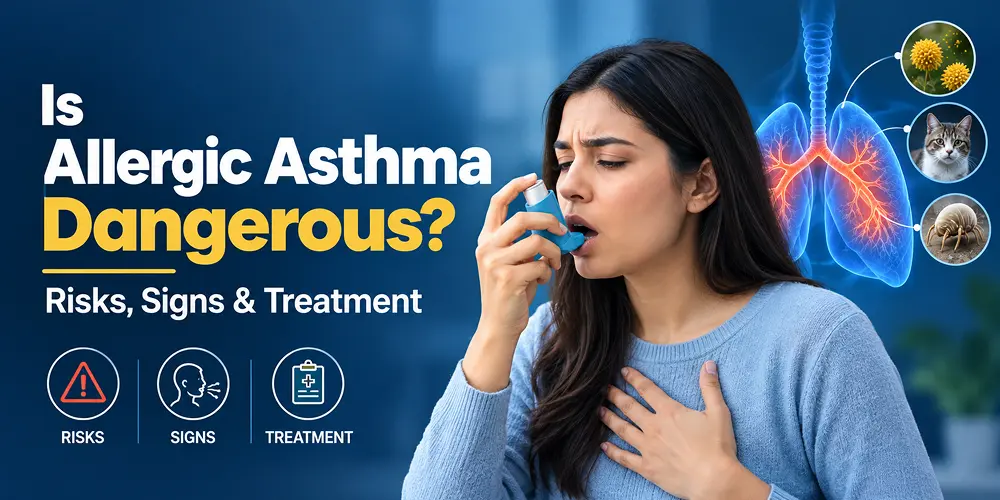
Quick Answer
Is allergic asthma dangerous? It can be, but the risk depends largely on how well the asthma is controlled. Many people with allergic asthma live normally with appropriate treatment and trigger management. The risk of a severe attack increases when symptoms become more frequent or rescue inhalers are needed more often.
Why would a grain of pollen, harmless to most people, cause one person’s airways to narrow? The answer lies in an immune system that mistakes a harmless substance for a threat. The World Health Organization estimated that asthma caused about 442,000 deaths worldwide in 2023.
So, is allergic asthma dangerous? For many people, it remains manageable with appropriate treatment. For others, an asthma attack can become severe within hours.
This article explains what makes a severe asthma attack more likely and when breathing symptoms require emergency care.
Key Takeaways
- Allergic asthma is common and often responds well to appropriate treatment.
- Poorly controlled airway inflammation increases the risk of severe asthma attacks.
- Frequent reliever use and a history of severe attacks or ICU care can signal higher risk.
- Difficulty speaking, bluish lips or face, severe breathlessness, or little relief from a rescue inhaler require emergency care.
What Is Allergic Asthma and Why Can It Become Dangerous?
Allergic asthma is a type of asthma triggered by allergens such as pollen, dust mites, mold, and pet dander. When someone with allergic asthma encounters a trigger, their immune response can cause the airways to become inflamed.
NIH estimates suggest that allergic asthma affects around 60 percent of asthma patients in the United States. The exact proportion varies across populations and depends on how dangerous allergic asthma is defined.
Now, if you’re unfamiliar with what is asthma, consider it a long-term condition that affects the airways. The condition becomes dangerous when airway narrowing becomes severe enough to restrict airflow significantly.

How Do Allergens Trigger an Asthma Flare?
The danger begins with a chain reaction inside the immune system. After becoming sensitized to an allergen, the immune system produces IgE antibodies against it.
On later exposure, these antibodies help trigger the release of inflammatory chemicals, including histamine and leukotrienes. The airway lining becomes swollen, and the muscles surrounding the airways tighten. Mucus production also increases.
As the airways narrow, airflow becomes restricted. This can cause wheezing, coughing, chest tightness, and shortness of breath. Common triggers include:
- Dust mites in bedding and soft furnishings.
- Pollen from trees, grasses, and weeds.
- Mold spores in damp areas.
- Pet dander from cats and dogs.
- Cockroach droppings in homes and apartments.
What Contributes to High-Risk Allergic Asthma?
Allergic asthma becomes a higher risk when airway inflammation is poorly controlled or when certain risk factors are present. Life-threatening allergic asthma is uncommon, yet it often follows warning signs that went unnoticed or untreated.
So, is allergic asthma dangerous for everyone? No. The risk varies from person to person and depends on factors such as asthma control, previous severe attacks, medication use, and exposure to triggers.
The WHO asthma fact sheet reports that most asthma-related deaths occur in low- and lower-middle-income countries, where under-diagnosis and under-treatment remain common. Access to appropriate diagnosis and effective treatment can therefore have a major impact on asthma outcomes.
Which Risk Factors Raise the Danger?
Doctors look for patterns that identify people at higher risk of severe asthma attacks. Important factors for high-risk allergic asthma include:
- A past ICU admission or intubation for asthma.
- Repeated emergency visits or oral steroid courses within a year.
- Frequent use of a reliever inhaler.
- A coexisting food allergy, since asthma raises the risk of severe food reactions.
- Limited access to medication or follow-up care.
Time matters too. Years of uncontrolled inflammation can thicken the airway walls, a process called airway remodeling. It may cause lasting loss of lung function.
Can Allergic Asthma Overlap with Eosinophilic Asthma?
Yes. Allergic and eosinophilic asthma can overlap in some people. Eosinophilic asthma is characterized by increased levels of eosinophils, a type of white blood cell involved in airway inflammation.
People with both allergic and eosinophilic features may have more persistent or difficult-to-control asthma. Doctors may use blood eosinophil counts and other clinical findings to identify the underlying inflammatory pattern.
COPD with Eosinophilic Phenotype Clinical Trials
Discover Innovative Treatment Options
Clinical trials may offer new ways to manage COPD symptoms and improve breathing for those with an eosinophilic phenotype.
Can Weather Contribute to Life-Threatening Allergic Asthma?
Yes. Certain weather conditions can trigger sudden and severe asthma attacks. In thunderstorm asthma, storm conditions can rupture pollen grains into smaller particles that become airborne and can penetrate deeper into the airways.
The risk is particularly high when thunderstorms occur during periods of high pollen levels. In Melbourne, a major thunderstorm asthma epidemic in November 2016 sent thousands of people to emergency departments within hours. Several people died in the event, highlighting how quickly an environmental trigger can turn into a medical emergency.
How Do You Recognize Severe Allergy-Induced Asthma Before It Becomes an Emergency?
Watch for a change from occasional symptoms to asthma that disrupts sleep or limits normal activities. Frequent reliever use can also signal poor asthma control and should prompt a review of your treatment plan.
Many asthma action plans use three zones to help people recognize worsening symptoms. The exact instructions and peak flow thresholds vary, so follow the plan provided by your doctor.
| Zone | What You May Notice | What to Do |
|---|---|---|
| Green |
| Continue your prescribed controller treatment and follow your usual asthma plan. |
| Yellow |
| Follow the yellow-zone instructions in your asthma action plan. Use your reliever as prescribed and seek medical advice if symptoms persist or worsen. |
| Red |
| Follow your emergency instructions and seek emergency medical care immediately. |
Your doctor should set the exact peak flow thresholds and medication instructions for your action plan. Treat these percentages as general guidance rather than universal cutoffs.
How Can You Lower the Risk of Dangerous Allergic Asthma?
Consistent treatment, trigger management, and a written asthma action plan can reduce the risk of severe attacks. The Global Initiative for Asthma recommends ICS-containing treatment because inhaled corticosteroids target airway inflammation and reduce the risk of serious asthma outcomes.
Key steps include:
- Daily controller medication: Inhaled corticosteroids reduce airway inflammation and cut the risk of severe attacks.
- Allergy testing: Skin or blood tests identify which allergens set off symptoms.
- Trigger reduction: Wash bedding in hot water, use dust-mite covers, and keep windows closed during pollen season.
- Allergen immunotherapy: Allergy shots or tablets can reduce sensitivity over time in selected patients.
- Biologic therapy: Specialists may prescribe these for moderate to severe disease.
- Written action plan: Regular reviews keep the plan matched to your symptoms and inhaler technique.
Those interested in how new treatments are evaluated can also learn more about clinical research opportunities.
COPD with Eosinophilic Phenotype Clinical Trials
Discover Innovative Treatment Options
Clinical trials may offer new ways to manage COPD symptoms and improve breathing for those with an eosinophilic phenotype.
Final Remarks
Is allergic asthma dangerous? It can be, particularly when inflammation remains uncontrolled or severe symptoms are not treated promptly. With appropriate management and a clear action plan, many people can keep their asthma under control and stay active.
Asthma care continues to evolve through clinical research. People interested in studies involving related respiratory conditions can explore Pulmonology Clinical Trials and COPD Clinical Trials.
FAQs About High-Risk Allergic Asthma
Can allergic asthma become severe?
Yes. Severity can rise when triggers are ignored, or controller medication is skipped. Respiratory infections, heavy air pollution, and hormonal changes can also worsen symptoms. Regular reviews let your doctor adjust treatment before control slips.
Can allergic asthma cause breathing problems?
Yes. Wheezing, shortness of breath, chest tightness, and coughing are typical. Symptoms often worsen at night or during exercise. Symptoms can persist between attacks when asthma remains poorly controlled.
What are the symptoms of a severe allergic asthma attack?
Severe signs include difficulty speaking a full sentence because of breathlessness, very rapid breathing, and visible pulling in of the skin around the ribs or neck. Bluish lips, drowsiness, or confusion are emergency warning signs. A chest with little or no wheezing can also indicate severely reduced airflow.
Is allergic asthma worse than other types of asthma?
No type of asthma is automatically more severe than another. Severity and risk depend on factors such as disease control and previous attacks. Allergic asthma may have identifiable triggers, which can help some people reduce exposure. Some people also have overlapping inflammatory features that make asthma harder to control.
When should you seek emergency care for allergic asthma?
Seek emergency medical care if severe symptoms do not improve after using your reliever according to your asthma action plan. Seek it too if speech becomes difficult or your lips turn blue. Hives, facial swelling, or throat tightness alongside breathing trouble may signal anaphylaxis.

