


Key Takeaways
- Congestive heart failure is a chronic, progressive condition where the heart cannot pump blood efficiently.
- Early detection of congestive heart failure symptoms significantly improves outcomes.
- There are four recognized congestive heart failure stages, each with distinct clinical markers.
- Congestive heart failure treatment has advanced considerably, with medications, devices, and lifestyle changes all playing a role.
- Ongoing cardiology clinical trials are actively reshaping how this condition is managed.
Introduction
More than 6 million adults in the United States are living with congestive heart failure right now. Many of them spent months dismissing swollen ankles as “just aging” or a worsening shortness of breath as being “out of shape.” By the time they walked into a cardiologist’s office, the damage was already layers deep. Moreover, they might also think: Is congestive heart failure reversible? That delay is the real danger.
Congestive heart failure does not announce itself dramatically. It creeps quietly, often disguised as fatigue, a persistent cough, or the feeling that your body is just… slower. And that subtlety is exactly why understanding this condition, its signals, its progression, and what can actually be done about it matters so much.
What Is Congestive Heart Failure?
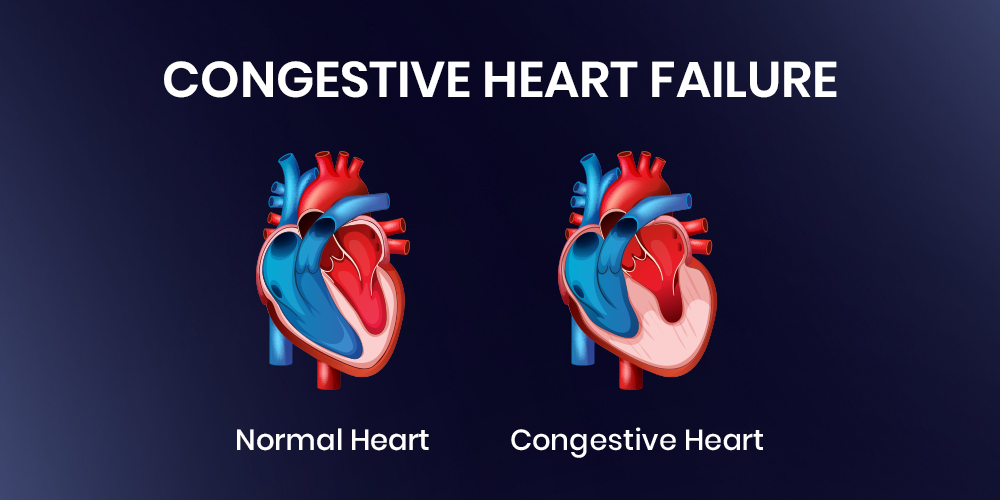
Cardiac failure is not the heart stopping. It is the heart struggling. When the heart muscle weakens or stiffens, it can no longer pump blood with enough force or volume. Blood backs up. Fluid accumulates. Organs suffer.
The term “congestive” refers specifically to that fluid buildup, typically in the lungs, legs, and abdomen.
There are two primary structural types:
Left-sided heart failure is the most common. The left ventricle loses its ability to pump oxygenated blood out to the body. Fluid then backs into the lungs, causing breathlessness and fatigue. Left-sided heart failure can be further broken into two categories:
- Systolic heart failure (also called HFrEF): the heart muscle contracts weakly, reducing ejection fraction
- Chronic Diastolic Heart Failure (HFpEF): the heart contracts normally, but the muscle is too stiff to relax and fill properly
Right-sided heart failure develops when the right ventricle fails to pump blood to the lungs effectively. It often follows left-sided failure. Right-sided heart failure causes fluid buildup in the legs, ankles, and abdomen rather than the lung
Congestive Heart Failure Causes
Understanding congestive heart failure causes helps contextualize who is at risk and why.
The most common causes of congestive heart failure include:
- Coronary artery disease and prior heart attacks
- Uncontrolled high blood pressure over the years
- Diabetes, particularly poorly managed
- Valvular heart disease (leaky or narrowed valves)
- Cardiomyopathy (disease of the heart muscle itself)
- Chronic kidney disease, which can trigger Cardiorenal syndrome, a complex bidirectional condition where heart and kidney failure accelerate each other
- Obesity and metabolic syndrome
- Some chemotherapy drugs and long-term alcohol misuse
Not every case follows the same path. Two patients can share the same diagnosis and have completely different underlying drivers.
Signs of Congestive Heart Failure: What to Watch For
The signs of congestive heart failure are often dismissed or misattributed. Here is what actually shows up clinically:
The most reported congestive heart failure symptoms:
- Shortness of breath, especially when lying flat (orthopnea)
- Waking up gasping for air at night (paroxysmal nocturnal dyspnea)
- Swelling in the feet, ankles, or legs (edema)
- Rapid or irregular heartbeat
- Persistent fatigue with minimal exertion
- A dry, persistent cough, sometimes producing pink-tinged mucus
- Sudden weight gain from fluid retention, sometimes 2 to 3 pounds overnight
- Reduced ability to exercise or walk without getting winded
- Confusion or difficulty concentrating in the advanced stages
The signs of congestive heart failure are not always dramatic. A patient might simply notice they need two pillows to sleep comfortably. That detail matters clinically.
Congestive heart failure symptoms in women often present differently, with more fatigue, nausea, and atypical chest discomfort rather than the classic pressure or shortness of breath men report.
Congestive Heart Failure Stages
The American College of Cardiology and the American Heart Association classify congestive heart failure stages using a lettered system (A through D), which differs from the older NYHA functional classes.
Stage A: At risk but no structural disease yet. This includes hypertensive patients, diabetics, and those with a family history. No symptoms.
Stage B: Structural changes present (reduced ejection fraction or prior heart attack), but still no symptoms. This is where congestive heart failure stages begin to have real therapeutic implications.
Stage C: Structural disease plus current or prior symptoms. This is where most patients receive a formal diagnosis. Congestive heart failure symptoms are active, and treatment is mandatory.
Stage D: Advanced, refractory congestive heart failure. Symptoms persist despite maximum medical therapy. This stage requires consideration of advanced therapies: heart transplant, left ventricular assist devices (LVADs), or palliative care.
Understanding which of the congestive heart failure stages a patient falls into drives every treatment decision.
How Is Congestive Heart Failure Diagnosed?
How is congestive heart failure diagnosed in clinical practice? It is not a single test. Diagnosis involves a combination of:
- Physical examination (checking for edema, lung crackles, elevated jugular venous pressure)
- Echocardiogram to assess ejection fraction and wall motion
- BNP or NT-proBNP blood tests, which are elevated in heart failure
- Chest X-ray to detect pulmonary congestion or an enlarged heart
- Electrocardiogram (ECG) to identify arrhythmias or prior MI changes
- Cardiac MRI in selected cases for detailed structural assessment
- Stress testing or coronary angiography when ischemia is suspected
A thorough workup separates true cardiac failure from conditions that mimic it, like severe anemia, lung disease, or thyroid dysfunction.
Lipoprotein(a) & ASCVD Clinical Trials
Explore Advanced Treatment Options
Clinical trials are investigating new therapies that may help reduce elevated Lipoprotein(a) levels and lower the risk of atherosclerotic cardiovascular disease (ASCVD).
Congestive Heart Failure Treatment: What Actually Works
Congestive heart failure treatment has evolved significantly. The goal is not just symptom relief; it is slowing or reversing disease progression.
Medications form the foundation:
- ACE inhibitors or ARBs (reduce cardiac workload)
- Beta-blockers (lower heart rate and improve pump function)
- Diuretics (relieve fluid congestion)
- SGLT2 inhibitors (newer agents with strong outcomes data, originally developed for diabetes)
- Aldosterone antagonists like spironolactone
- Sacubitril/valsartan (a combined neprilysin inhibitor and ARB with mortality benefit)
Device-based congestive heart failure treatment:
- Implantable cardioverter-defibrillators (ICDs) for patients at risk of sudden cardiac death
- Cardiac resynchronization therapy (CRT) for patients with dyssynchrony
- LVADs as a bridge to transplant or as destination therapy in Stage D
Lifestyle modifications:
- Sodium restriction (typically under 2 grams/day)
- Daily weight monitoring to detect early fluid gain
- Structured cardiac rehabilitation
- Managing comorbidities aggressively
Is Congestive Heart Failure Reversible?
Is congestive heart failure reversible? In some cases, yes. When the cause is treatable, such as an underactive thyroid, alcohol-induced cardiomyopathy, or a correctable valve problem, cardiac function can recover substantially with appropriate congestive heart failure treatment.
Peripartum cardiomyopathy, which develops around pregnancy, also shows notable recovery rates with early intervention.
However, for most patients with chronic heart failure, particularly those with ischemic damage from a prior heart attack, the underlying structural changes are permanent. Symptoms can be well-controlled, and progression can be slowed, but the disease itself remains.
Is Congestive Heart Failure Curable?
Is congestive heart failure curable? A heart transplant offers the closest thing to a cure for eligible patients. But donor organ availability is severely limited, and the procedure carries significant risks.
For the vast majority of patients, chronic heart failure is a condition managed rather than cured. The trajectory can be significantly improved with adherence to congestive heart failure treatment protocols but describing it as “curable” in the general population is clinically inaccurate.
The Research Frontier
Cardiology clinical trials are actively exploring novel pathways in heart failure management. One area gaining serious momentum involves lipid abnormalities beyond LDL. The clinical trial for elevated lipoprotein(a) and ASCVD represents a growing area of investigation, as elevated Lp(a) levels are associated with accelerated cardiovascular disease and may independently contribute to cardiac remodeling.
Major academic hubs are running studies on gene therapy, novel SGLT2 combinations, stem cell approaches, and remote monitoring technology. Clinical trials in Massachusetts are being conducted by Lucida Clinical Trials to help advance research and help reshape future treatment options, giving hope to those living with the condition. Join a cardiology study and navigate whether you qualify or not, and thus, play your part in advancing research.
Patients with advanced or refractory congestive heart failure should ask their cardiologist whether enrollment in cardiology clinical trials is an option. Participation expands access to investigational therapies and contributes directly to improving outcomes for future patients.
Living With Chronic Heart Failure
Chronic heart failure is a long-term commitment to self-management. Patients who do well tend to share certain habits: they weigh themselves daily, they know when to call their care team, and they take their medications consistently.
Psychological weight is real. Depression and anxiety are significantly more common in chronic heart failure patients than in the general population. Addressing mental health is not secondary care; it is part of the treatment plan.
Support from a multidisciplinary team, including cardiologists, heart failure nurses, pharmacists, and social workers, consistently outperforms isolated physician care in outcomes data.
Lipoprotein(a) & ASCVD Clinical Trials
Explore Advanced Treatment Options
Clinical trials are investigating new therapies that may help reduce elevated Lipoprotein(a) levels and lower the risk of atherosclerotic cardiovascular disease (ASCVD).
The Bottom Line
Congestive heart failure is serious. It is also manageable. The patients who fare best are those who catch the signs of congestive heart failure early, understand their congestive heart failure stages, and stay actively engaged in their congestive heart failure treatment plan.
Advances in cardiology are moving fast. What was considered end-stage disease a decade ago now has meaningful therapeutic options. The conversation between a patient and their physician has never been more important, or more full of possibility.

